TB-500 Research Peptide Guide : Benefits , Mechanism of Action, Application & Scientific Insights

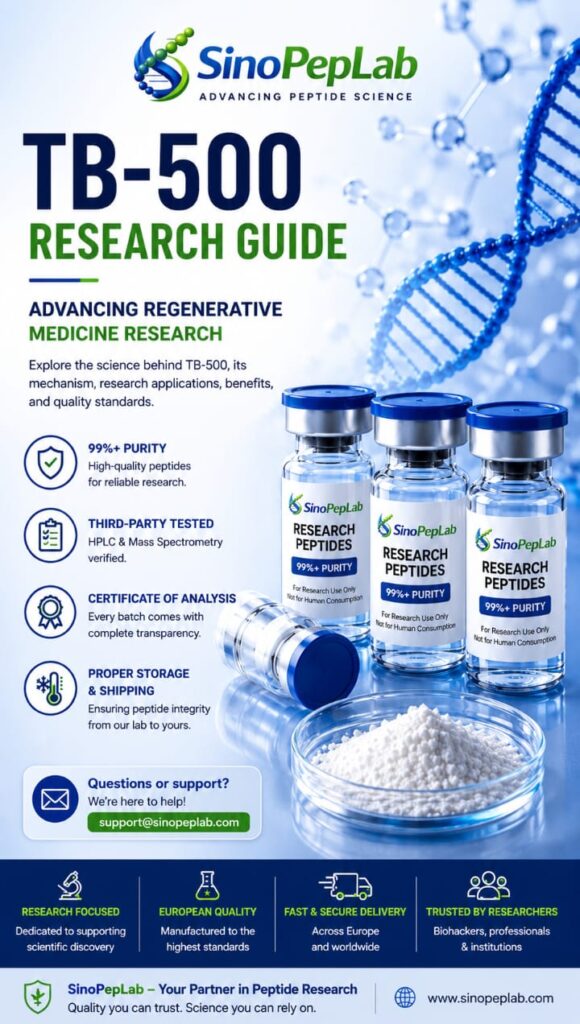
A complete Scientific Guide By SinoPepLab
Introduction
The field of peptide research has experienced remarkable growth over the past decade, opening new opportunities for scientists investigating tissue regeneration, cellular repair, wound healing, and regenerative medicine. Among the many peptides studied in laboratories worldwide, TB-500 has become one of the most discussed research peptides due to its unique biological properties and its potential role in supporting studies involving cell migration, tissue remodeling, angiogenesis, and musculoskeletal recovery.
As interest in regenerative medicine continues to grow across Europe and internationally, researchers are increasingly looking for reliable information about TB-500, its biological functions, laboratory handling, manufacturing quality, and current scientific evidence. Unfortunately, much of the information available online is either oversimplified, scientifically inaccurate, or lacks transparency regarding product quality and research standards
This comprehensive TB-500 Research Guide has been developed by SinoPepLab, a European peptide manufacturer and research partner committed to supporting laboratories with premium-quality research peptides, educational resources, and rigorous quality assurance. Based in Germany and serving researchers throughout Europe and worldwide, SinoPepLab combines modern manufacturing partnerships with strict analytical testing to help ensure consistency, purity, and reliability in every batch.
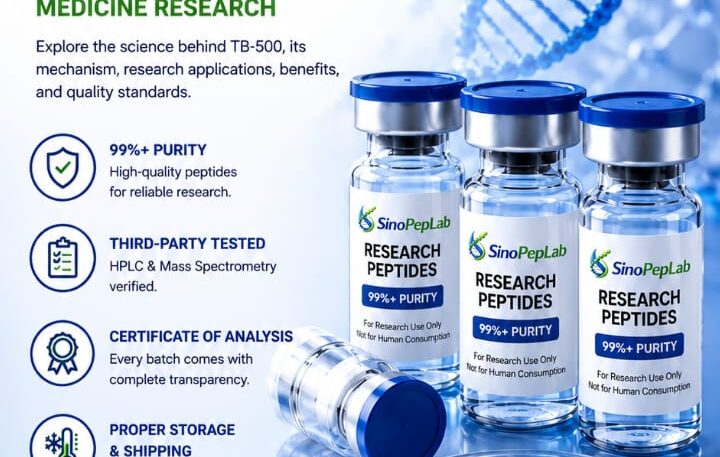
Every TB-500 peptide supplied by SinoPepLab undergoes extensive quality control, including third-party verification, High-Performance Liquid Chromatography (HPLC) analysis, Mass Spectrometry confirmation, and batch-specific Certificates of Analysis (COAs). Our commitment to scientific transparency enables researchers to conduct studies with confidence while maintaining high laboratory standards
Unlike many suppliers that simply list products for sale, SinoPepLab believes that education is equally important. Understanding the science behind peptides allows researchers to make informed decisions, design better experiments, and interpret research findings more accurately. This guide is intended to serve as both an educational resource and a practical reference for researchers exploring TB-500.
What Is TB-500?
TB-500 is a synthetic research peptide derived from a naturally occurring protein known as Thymosin Beta-4 (Tβ4). Thymosin Beta-4 is a peptide naturally present in many human and animal tissues and has been widely studied for its role in cellular migration, actin regulation, tissue remodeling, and wound-healing processes.
TB-500 represents a synthetic peptide fragment designed for laboratory research. Scientists have investigated it because it appears to retain several biological characteristics associated with Thymosin Beta-4 while offering advantages for controlled experimental studies.
Research has explored TB-500 in relation to:
.Tissue repair mechanisms
.Cell migration
.Angiogenesis (formation of new blood vessels)
.Connective tissue remodeling
.Muscle recovery research
.Tendon and ligament studies
.Skin regeneration research
.Orthopedic research
.Inflammation-related biological pathways
.Regenerative medicine
It is important to understand that TB-500 sold by SinoPepLab is intended strictly for laboratory research purposes only. It is not approved as a medicine and is not intended for human consumption. Researchers should use TB-500 only in accordance with applicable regulations and institutional guidelines.
The Growing Importance of Peptide Research
Peptides are short chains of amino acids that function as signaling molecules within biological systems. They influence communication between cells and regulate numerous physiological processes, including metabolism, immune responses, tissue maintenance, and cellular repair.
Advances in peptide synthesis and biotechnology have significantly expanded research opportunities over the past decade. Scientists are now studying peptides across a wide range of disciplines, including
.Regenerative medicine
.Tissue engineering
.Sports medicine research
.Dermatological research
.Orthopedic science
.Metabolic research
.Healthy aging research
.Cellular biology
.Molecular medicine
.Pharmaceutical development
TB-500 has emerged as one of the most frequently investigated peptides within regenerative medicine because of its association with biological processes involved in tissue organization and repair
The History of TB-500 Research
Scientific interest in Thymosin Beta-4 began several decades ago when researchers identified it as a naturally occurring peptide involved in regulating actin, one of the most abundant structural proteins inside cells.
As research progressed, scientists observed that Thymosin Beta-4 appeared to participate in several important biological activities, including:
.Cellular migration
.Cell differentiation
.Tissue organization
.Blood vessel formation
.Wound-healing responses
These findings encouraged researchers to investigate synthetic peptide fragments that might reproduce selected biological characteristics under laboratory conditions. TB-500 subsequently became one of the most extensively studied synthetic peptides in experimental regenerative medicine.
Although research continues to evolve, TB-500 has attracted interest from academic institutions, biotechnology companies, and pharmaceutical researchers exploring mechanisms involved in tissue remodeling and cellular repair.
Molecular Structure And Biological Characteristics
TB-500 belongs to the growing family of synthetic research peptides designed to investigate biological signaling pathways.
Researchers study TB-500 because it appears to interact with cellular systems associated with:
.Cytoskeletal organization
.Cell movement
.Cellular communication
.Tissue regeneration
.Blood vessel development
.Extracellular matrix remodeling
Unlike large proteins, peptides such as TB-500 possess relatively small molecular structures, making them useful tools for investigating highly specific biological mechanisms under controlled laboratory conditions.
Understanding these molecular characteristics helps researchers design experiments that explore how signaling peptides may influence complex biological processes.
Why Research Study TB-500
TB-500 has become increasingly popular in scientific research because it offers investigators an opportunity to study several interconnected biological mechanisms simultaneously.
Current areas of investigation include:
Tissue Repair Research
Scientists continue exploring how TB-500 may influence cellular migration and tissue remodeling during experimental models of tissue repair.
Musculoskeletal Research
Laboratories investigate TB-500 in studies involving tendons, ligaments, skeletal muscle, and connective tissues to better understand biological repair mechanisms.
Angiogenesis Research
Researchers examine whether TB-500 influences signaling pathways involved in the formation of new blood vessels, an essential component of tissue maintenance and repair.
Cellular Communication
TB-500 is also being studied for its potential influence on intracellular signaling networks that regulate cell migration and organization.
Inflammation Research
Some experimental studies investigate how TB-500 may interact with inflammatory signaling pathways during tissue recovery models.
These research areas continue to expand as scientists gain a deeper understanding of peptide biology and regenerative medicine.
Coming Next – Part 2
In Part 2, we’ll explore:
.The Mechanism of Action of TB-500
.How TB-500 Interacts with Cells
.The Science Behind Actin Regulation
.Tissue Repair and Cellular Migration Research
.Blood Vessel Formation (Angiogenesis)
.Inflammation and Regenerative Medicine Research
.Current Scientific Evidence and Published Studies
This next section will dive deeper into the molecular science behind TB-500 while maintaining a professional, SEO-focused style tailored for SinoPepLab’s audience.
Part 2 – Mechanism of Action, Cellular Biology, Tissue Repair Research, and Scientific Evidence
Understanding how TB-500 functions at the cellular level is essential for appreciating why it has become one of the most widely investigated peptides in regenerative medicine research. While TB-500 is not an approved therapeutic medicine, scientists continue to explore its biological properties in laboratory settings because of its relationship to Thymosin Beta-4 (Tβ4) and its involvement in several cellular processes that are fundamental to tissue maintenance and repair.
Unlike many compounds that act on a single receptor or pathway, TB-500 is studied for its potential influence on multiple biological mechanisms, including cytoskeletal organization, cellular migration, angiogenesis, extracellular matrix remodeling, and inflammatory signaling. These interconnected processes are central to wound healing and tissue regeneration, making TB-500 a peptide of significant interest in preclinical research.
At SinoPepLab, our mission is not only to supply premium research peptides but also to help researchers understand the science behind them. By combining laboratory-tested products with educational resources, we aim to support informed, high-quality research across Europe and beyond.
Understanding the Mechanism of Action of TB-500
The biological activity of TB-500 is closely linked to Thymosin Beta-4, a naturally occurring peptide that plays a role in regulating actin, one of the most abundant proteins within eukaryotic cells.
Actin forms part of the cytoskeleton, the internal structural framework that maintains cell shape and enables movement. Because cell migration is essential for tissue development, wound healing, immune responses, and blood vessel formation, proteins that regulate actin dynamics are of great interest in regenerative medicine.
TB-500 has been investigated because it appears to influence these actin-related processes, potentially supporting cellular behaviors involved in tissue remodeling and repair.
Rather than acting as a traditional drug that binds to a single receptor, TB-500 is thought to affect several biological pathways simultaneously. This complexity is one reason why it continues to attract scientific attention.
Actin Regulation: The Foundation of Cellular Movement
To understand TB-500, it is first necessary to understand the role of actin.
Actin is a structural protein found in nearly every cell of the human body. It contributes to:
.Maintaining cell shape
.Supporting intracellular transport
.Enabling muscle contraction
.Allowing cells to migrate
.Assisting cell division
.Participating in wound repair
During tissue injury or experimental wound models, cells such as fibroblasts, endothelial cells, and immune cells must migrate toward the affected area. This movement depends on the constant assembly and disassembly of actin filaments.
Researchers are investigating whether TB-500 may influence these actin-regulated processes, helping scientists better understand cellular migration during tissue repair.
Cellular Migration and Tissue Remodeling
One of the most extensively studied aspects of TB-500 research involves cell migration.
When tissues are damaged, successful repair depends on the coordinated movement of many different cell types. Fibroblasts, endothelial cells, stem-cell populations, and immune cells all participate in rebuilding tissue architecture.
Experimental studies suggest that pathways associated with Thymosin Beta-4 and TB-500 may influence these migration processes, making them valuable subjects for regenerative medicine research.
Improved understanding of cell migration may contribute to future advances in:
.Tissue engineering
.Biomaterial development
.Orthopedic research
.Skin biology
.Surgical healing models
.Regenerative medicine
Although promising, these observations remain areas of ongoing scientific investigation rather than established clinical outcomes.
Angiogenesis Research: Formation of New Blood Vessels
Healthy tissues require a continuous supply of oxygen and nutrients delivered through blood vessels.
Following tissue injury, new blood vessels often develop through a biological process known as angiogenesis.
Researchers have investigated whether TB-500-associated pathways may contribute to this process by influencing endothelial cell behavior and vascular remodeling.
Experimental models have explored how these mechanisms might affect:
.Tissue oxygenation
.Nutrient delivery
.Cellular survival
.Healing environments
.Regenerative responses
Understanding angiogenesis is important not only for regenerative medicine but also for cardiovascular research, tissue engineering, and biomaterials science.
Extracellular Matrix Remodeling
The extracellular matrix (ECM) provides structural support for tissues while regulating communication between cells.
During wound repair, this matrix undergoes continuous remodeling.
Scientists continue studying whether TB-500 influences biological processes associated with:
.Collagen organization
.Fibroblast migration
.Connective tissue remodeling
.Matrix protein regulation
.Tissue architecture
These investigations may improve understanding of how tissues recover following experimental injury.
Inflammatory Signaling Research
Inflammation represents one of the body’s earliest responses following tissue damage.
It helps remove damaged cells while initiating repair.
However, prolonged or excessive inflammation may interfere with tissue remodeling.
Researchers are investigating whether pathways associated with TB-500 influence inflammatory signaling during experimental tissue repair.
Current research explores potential interactions involving:
.Cytokine regulation
.Immune-cell migration
.Cellular communication
.Tissue remodeling
These studies remain active areas of investigation and continue to expand our understanding of peptide biology.
Tissue Repair Research
Perhaps the best-known area of TB-500 research involves tissue repair.
Scientists have examined TB-500 in experimental models involving:
.Skeletal muscle
.Tendons
.Ligaments
.Connective tissues
.Skin
.Soft tissue
.Orthopedic tissues
Researchers are interested in understanding how biological signaling pathways associated with Thymosin Beta-4 may contribute to coordinated repair mechanisms.
These investigations continue to provide valuable insights into regenerative biology.
Musculoskeletal Research
Musculoskeletal tissues possess varying capacities for regeneration.
Tendons and ligaments, for example, generally heal more slowly than muscle because of reduced blood supply.
Experimental TB-500 research has therefore explored mechanisms involving:
.Tendon biology
.Ligament remodeling
.Skeletal muscle recovery models
.Connective tissue organization
.Orthopedic tissue engineering
These findings remain subjects of ongoing laboratory research rather than established therapeutic conclusions.
Skin Biology and Wound-Healing Models
Skin represents one of the most extensively studied organs in regenerative medicine.
Researchers continue exploring TB-500-associated pathways within laboratory models investigating:
.Keratinocyte migration
.Fibroblast activity
.Collagen remodeling
.Experimental wound closure
.Tissue organization
.Cellular communication
Understanding these mechanisms may contribute to broader knowledge regarding tissue regeneration.
Cardiovascular Research
Although less widely recognized, TB-500 has also been investigated within cardiovascular research.
Scientists have explored whether biological pathways related to Thymosin Beta-4 influence:
.Cardiac tissue organization
.Blood vessel biology
.Endothelial function
.Experimental ischemia models
.Cellular survival mechanisms
These investigations remain experimental and continue to evolve.
Neurological Research
Emerging research has begun exploring whether Thymosin Beta-4-related pathways participate in nervous system biology.
Experimental investigations examine:
.Neural cell migration
.Neuroinflammation
.Peripheral nerve repair models
.Cellular differentiation
.Regenerative biology
These studies remain preliminary but illustrate the broad scientific interest surrounding peptide signaling.
Current Scientific Evidence
TB-500 research continues to grow, with studies conducted by universities, biotechnology companies, and research institutions worldwide.
Current evidence includes:
.Cell-culture experiments
.Animal studies
.Molecular biology investigations
.Regenerative medicine research
.Experimental wound-healing models
Importantly, large-scale human clinical trials evaluating TB-500 remain limited, and many questions regarding long-term efficacy and safety require further investigation.
Researchers should therefore distinguish clearly between preclinical findings and clinically established evidence.
At SinoPepLab, we encourage responsible scientific interpretation and emphasize the importance of high-quality research materials supported by transparent analytical testing.
Why Research Quality Matters
The reliability of any scientific study depends heavily on the quality of the research materials being used.
Even subtle differences in peptide purity, identity, storage conditions, or batch consistency can influence experimental outcomes.
For this reason, SinoPepLab implements comprehensive quality assurance procedures, including:
.99%+ purity specifications (where applicable)
.Third-party laboratory testing
.High-Performance Liquid Chromatography (HPLC) analysis
.Mass Spectrometry verification
.Batch-specific Certificates of Analysis (COAs)
.Controlled storage and handling
.Manufacturing partnerships in Germany and Europe
By maintaining rigorous quality standards, we aim to provide researchers with dependable products that support reproducible laboratory results.
Coming Next – Part 3
In Part 3, we’ll cover:
.Laboratory Handling and Reconstitution of TB-500
.Storage and Stability Guidelines
.Quality Control and Analytical Testing
.HPLC, Mass Spectrometry, and Certificates of Analysis
.Why Manufacturing Quality Matters
.How SinoPepLab Produces Premium TB-500 in Germany
.Choosing a Trusted European Research Peptide Supplier
This section will combine practical laboratory guidance with manufacturing transparency and SEO-focused content designed to strengthen SinoPepLab’s authority in peptide research.
Part 3- Laboratory Handling, Reconstitution , Storage , Quality Control, Manufacturing Standard & Why Researchers Choose SinoPepLab
As peptide research continues to advance, the quality of research materials has become just as important as the scientific questions being investigated. Even the most carefully designed laboratory study can produce unreliable or irreproducible results if the peptide used is improperly manufactured, contaminated, degraded during transport, or inconsistently produced between batches.
For this reason, experienced researchers understand that selecting a peptide supplier involves far more than comparing prices. It requires evaluating manufacturing practices, analytical testing, storage conditions, documentation, and scientific transparency.
At SinoPepLab, our commitment extends beyond supplying research peptides. Based in Germany and serving laboratories across Europe and worldwide, we aim to provide researchers with premium-quality TB-500 supported by rigorous quality assurance, batch consistency, and educational resources that promote responsible scientific research.
Why Proper Laboratory Handling of TB-500 Matters
Peptides are biologically active molecules that require careful handling to preserve their structural integrity. Factors such as temperature fluctuations, repeated freeze-thaw cycles, prolonged exposure to moisture, and improper storage can affect peptide stability and compromise research outcomes.
Proper laboratory handling helps ensure that experimental data remain consistent and reproducible.
Researchers should always follow established laboratory protocols and the storage recommendations provided by the manufacturer.
Good handling practices include:
.Keeping peptide vials sealed until use.
.Minimizing unnecessary exposure to room temperature.
.Using clean laboratory equipment.
.Clearly labeling all prepared solutions.
.Recording preparation dates and storage conditions.
.Avoiding repeated freeze-thaw cycles whenever possible.
Maintaining these standards supports reliable research and protects the integrity of valuable experimental work.
Reconstitution of TB-500
TB-500 is commonly supplied as a lyophilized (freeze-dried) powder, a format chosen because it provides greater stability during transport and long-term storage compared with pre-mixed liquid solutions.
Before use in laboratory experiments, researchers generally reconstitute the peptide using an appropriate sterile laboratory solvent selected according to the requirements of their specific protocol.
When reconstituting TB-500, laboratories typically consider:
.Sterility of the working environment.
.Accurate measurement of solvent volumes.
.Gentle mixing rather than vigorous shaking.
.Proper labeling of the final solution.
.Immediate storage under recommended conditions.
Researchers should always follow their institutional laboratory procedures and manufacturer recommendations when preparing peptide solutions.
Storage Guidelines for TB-500
Correct storage is essential for maintaining peptide quality.
Although specific storage conditions may vary depending on the formulation and intended research application, general laboratory recommendations include:
Before Reconstitution
Lyophilized TB-500 is typically stored under refrigerated or frozen laboratory conditions according to the manufacturer’s guidance.
Protection from:
.Heat
.Moisture
.Direct sunlight
.Frequent temperature changes
helps preserve peptide stability.
After Reconstitution
Once prepared in solution, stability may become more limited.
Researchers often:
.Store prepared solutions under refrigerated conditions for short-term laboratory use.
.Avoid repeated freeze-thaw cycles.
.Use aliquots when appropriate to minimize degradation.
.Discard solutions according to laboratory protocols when stability limits are reached.
Proper storage contributes to more consistent experimental results.
Stability of TB-500
Peptide stability represents one of the most important factors affecting research quality.
Several variables influence stability, including:
.Temperature
.Humidity
.Light exposure
.Solution pH
.Storage duration
.Handling procedures
Scientific laboratories routinely monitor these variables to ensure that research materials remain suitable for experimental use.
High-quality manufacturers also perform stability assessments during product development to help establish appropriate storage recommendations.
Understanding Peptide Purity
Purity refers to the proportion of the desired peptide relative to detectable impurities within a sample.
High purity helps researchers reduce variability and improve confidence in experimental outcomes.
At SinoPepLab, our research peptides are manufactured according to rigorous quality standards, with many products meeting 99%+ purity specifications, where applicable.
However, purity alone does not guarantee quality.
Researchers should also evaluate:
.Identity verification
.Batch consistency
.Analytical documentation
.Manufacturing controls
.Storage procedures
A comprehensive quality assurance program addresses all of these factors.
High-Performance Liquid Chromatography (HPLC)
One of the most important analytical methods used in peptide quality control is High-Performance Liquid Chromatography (HPLC).
HPLC enables laboratories to:
.Evaluate peptide purity.
.Detect impurities.
.Compare production batches.
.Verify manufacturing consistency.
Each chromatogram provides valuable information regarding the composition of the peptide sample.
At SinoPepLab, HPLC analysis forms an essential part of our quality assurance process, helping ensure that researchers receive well-characterized research materials.
Mass Spectrometry Verification
While HPLC evaluates purity, Mass Spectrometry (MS) helps confirm peptide identity.
Mass Spectrometry measures the molecular weight of a peptide with exceptional precision.
Researchers use this technique to verify that:
.The correct peptide has been synthesized.
.The expected molecular mass is present.
.Manufacturing has produced the intended sequence.
Combining HPLC with Mass Spectrometry provides a more complete assessment of peptide quality than relying on either technique alone.
Certificates of Analysis
Every serious research laboratory understands the importance of documentation.
A Certificate of Analysis (COA) provides analytical information for a specific production batch.
Typical information may include:
.Product identification
.Batch number
.Purity results
.Analytical methods
.Molecular weight confirmation
.Manufacturing date
.Storage recommendations
At SinoPepLab, batch-specific COAs help promote transparency and allow researchers to review quality data before beginning their experiments.
Batch-to-Batch Consistency
Reproducibility is one of the cornerstones of scientific research.
For long-term projects, laboratories often require multiple production batches over extended periods.
Consistent manufacturing helps ensure that future batches closely match previous ones.
This reduces unnecessary experimental variation and supports more reliable scientific conclusions.
SinoPepLab places strong emphasis on manufacturing consistency through validated production processes and ongoing quality monitoring.
Why Manufacturing Quality Matters
Researchers frequently focus on peptide purity while overlooking other critical manufacturing factors.
In reality, high-quality peptide production requires careful control at every stage, including:
.Raw material selection
.Peptide synthesis
.Purification
.Analytical testing
.Filling procedures
.Packaging
.Storage
.Shipping
.Documentation
Every step contributes to the overall reliability of the final product.
At SinoPepLab, manufacturing partnerships in Germany and Europe help ensure that these quality standards remain central to our operations.
Why Researchers Across Europe Choose SinoPepLab
Researchers require more than a supplier—they need a dependable scientific partner.
SinoPepLab has built its reputation by focusing on transparency, quality, and customer support.
Our commitment includes:
.More than 10 years of peptide industry experience
.Official entry into the global market in December 2024
.Germany-based operations
.European manufacturing partnerships
.Worldwide shipping
.Fast delivery throughout Germany, Spain, France, Italy, Belgium, the Netherlands, the United Kingdom, and across Europe
.Third-party laboratory testing
.HPLC purity analysis
.Mass Spectrometry verification
.Batch-specific Certificates of Analysis
.99%+ purity specifications where applicable
.Secure packaging and temperature-conscious shipping
.Educational resources supporting responsible peptide research
.Dedicated technical support
We believe that scientific progress depends on trust, reproducibility, and uncompromising quality.
Supporting Responsible Peptide Research
As peptide science continues to evolve, researchers must balance scientific curiosity with responsible laboratory practice.
TB-500 remains an important subject of investigation within regenerative medicine, tissue engineering, and molecular biology.
However, researchers should distinguish clearly between:
.Experimental laboratory findings.
.Preclinical research.
.Approved clinical applications.
At SinoPepLab, we encourage evidence-based interpretation of scientific literature and responsible use of research materials.
Our goal is to provide laboratories with products that support accurate, reproducible, and high-quality scientific investigations.
Part 4 – Current Research Applications, Safety Considerations , TB-500 vs BPC-157 and Frequently Asked Questions
As peptide science continues to evolve, TB-500 remains one of the most widely discussed research peptides in regenerative medicine. Researchers across Europe, North America, and Asia continue to investigate its biological properties in laboratory settings to better understand the mechanisms involved in tissue repair, cellular migration, angiogenesis, and inflammatory signaling.
While scientific interest continues to expand, it is essential to distinguish ongoing laboratory research from established clinical evidence. Many studies involving TB-500 remain in the preclinical stage, and additional research is needed to determine how these findings translate into clinical applications.
At SinoPepLab, we believe that responsible peptide research begins with accurate scientific information, premium-quality research materials, and complete transparency regarding product quality and intended use.
Tissue Repair Research
One of the most extensively investigated areas of TB-500 research involves tissue repair.
Following tissue injury, biological repair depends on multiple coordinated processes, including:
.Cellular migration
.Extracellular matrix remodeling
.Blood vessel formation
.Inflammatory regulation
.Collagen organization
.Cellular communication
Researchers continue studying how TB-500-associated pathways may influence these biological mechanisms within controlled laboratory environments.
Experimental models have examined tissue repair involving:
.Skeletal muscle
.Tendons
.Ligaments
.Connective tissue
.Skin
.Soft tissues
Although findings remain under investigation, these studies continue to improve scientific understanding of regenerative biology.
Tendon And Ligament Research
Tendons and ligaments possess relatively limited blood supply compared with skeletal muscle, making them important subjects in regenerative medicine research.
Scientists continue investigating TB-500 within experimental models involving:
.Tendon remodeling
.Ligament organization
.Connective tissue repair
.Fibroblast migration
.Collagen alignment
.Mechanical tissue properties
Understanding these biological mechanisms may contribute to future developments in orthopedic research and tissue engineering.
Skeletal Muscle Research
Healthy skeletal muscle depends upon coordinated interactions between muscle fibers, satellite cells, connective tissue, blood vessels, and immune cells.
Researchers continue exploring TB-500-associated pathways within laboratory models examining:
.Muscle regeneration
.Cellular differentiation
.Structural remodeling
.Experimental muscle injury
.Recovery biology
These investigations remain preclinical and should not be interpreted as established therapeutic outcomes.
Skin Regeneration Research
Skin provides one of the most useful experimental models for studying regenerative biology.
TB-500 continues to attract scientific interest because researchers investigate its potential role in biological processes involving:
.Fibroblast activity
.Keratinocyte migration
.Collagen organization
.Extracellular matrix remodeling
.Experimental wound closure
.Tissue remodeling
These investigations contribute to a broader understanding of tissue repair mechanisms rather than established medical treatments.
Orthopedic Research
Orthopedic research increasingly focuses on understanding the biological processes that support tissue maintenance and repair.
Scientists continue evaluating TB-500 within laboratory studies involving:
.Bone-soft tissue interactions
.Connective tissue biology
.Joint-associated tissues
.Experimental orthopedic injury models
.Regenerative medicine
Although promising areas of investigation, these remain active research topics requiring further scientific validation.
Cardiovascular Research
The cardiovascular system depends upon healthy blood vessel function and organized tissue architecture.
Researchers continue investigating whether pathways associated with Thymosin Beta-4 may influence:
.Blood vessel biology
.Endothelial cell migration
.Cardiac tissue organization
.Experimental ischemia models
.Vascular remodeling
These studies continue expanding scientific understanding of peptide biology but remain largely preclinical.
Neurological Research
Recent scientific investigations have explored whether Thymosin Beta-4-related pathways participate in nervous system biology.
Current laboratory research examines:
.Peripheral nerve regeneration
.Neural cell migration
.Neuroinflammatory responses
.Cellular differentiation
.Tissue remodeling
Although encouraging, these investigations remain experimental.
Regenerative Medicine Research
Regenerative medicine represents one of the fastest-growing areas of biomedical science.
Rather than simply treating symptoms, regenerative medicine investigates methods for understanding how tissues maintain, repair, and regenerate themselves.
TB-500 continues to be studied alongside several other research peptides involved in regenerative biology, including:
.BPC-157
.GHK-Cu
.MOTS-C
.Epitalon
Each peptide possesses unique biological characteristics, and researchers continue exploring how these signaling molecules influence different cellular pathways.
TB-500 VS BPC-157
One of the most frequently asked questions among researchers concerns the differences between TB-500 and BPC-157.
Although both peptides are widely investigated within regenerative medicine research, they differ in origin, biological characteristics, and research focus.
| Feature | TB-500 | BPC-157 |
| Origin | synthetic fragment related to thymosin Beta-4 | synthetic peptide derived from body protection Compound |
| Primary Research | Cellular migration angiogenesis , tissue remodeling | Gastrointestinal biology , connective tissue, wound healing |
| Research Areas | Musculoskeletal tissue , skin, blood , vessels | Tendons , ligaments , digestive tissue , muscle |
| Actin regulation and cellular movement | Growth Factor and Repair-related pathways | |
| Current Status | Research Peptide | Research Peptide |
Rather than viewing one peptide as “better” than the other, researchers typically select the peptide most appropriate for the biological questions being investigated.
Safety Considerations
TB-500 continues to be investigated primarily within laboratory settings.
Researchers should remember several important considerations:
.Human clinical evidence remains limited.
.Many published studies remain preclinical.
.Long-term human safety has not been fully established.
.Laboratory materials should be handled using appropriate research protocols.
.Institutional guidelines should always be followed.
At SinoPepLab, we encourage responsible scientific research supported by transparent quality documentation.
Research Limitations
Like every area of biomedical science, TB-500 research has limitations.
Current challenges include:
.Limited human clinical trials
.Small sample sizes in some studies
.Variability between experimental models
.Ongoing investigation of biological mechanisms
.Need for additional long-term research
Understanding these limitations helps researchers interpret findings responsibly.
Why Scientific Transparency Matters
One of the greatest challenges facing today’s peptide industry is misinformation.
Researchers often encounter exaggerated claims unsupported by scientific evidence.
At SinoPepLab, we believe that educational resources should remain:
.Accurate
.Evidence-based
.Transparent
.Scientifically responsible
Our goal is not simply to sell peptides but to contribute to a more informed research community.
Every TB-500 batch supplied by SinoPepLab is supported by:
.Third-party testing
.HPLC analysis
.Mass Spectrometry verification
.Certificate of Analysis (COA)
.Batch consistency
.Secure packaging
.Professional customer support
This commitment helps researchers obtain dependable materials for high-quality laboratory investigations.
Frequently Asked Questions (Part 1 )
What is TB-500?
TB-500 is a synthetic research peptide related to the naturally occurring protein Thymosin Beta-4. It is studied for its role in cellular migration, tissue remodeling, angiogenesis, and regenerative biology.
Is TB-500 approved as a medicine?
No. TB-500 supplied by SinoPepLab is intended for laboratory research purposes only and is not approved for human consumption or clinical use.
Why is TB-500 popular in regenerative medicine research?
Researchers investigate TB-500 because of its association with biological processes involved in tissue organization, wound-healing models, cell migration, and connective tissue biology.
How does SinoPepLab verify product quality?
Our TB-500 undergoes:
.Third-party laboratory testing
.HPLC purity analysis
.Mass Spectrometry verification
.Batch-specific Certificate of Analysis
.Strict quality control procedures
Why choose a European supplier?
European quality standards, transparent documentation, reliable shipping, and consistent manufacturing practices make sourcing from a trusted supplier such as SinoPepLab an important consideration for research laboratories.
Part 5 (Final) – Frequently Asked Questions , Scientific References , Why Researchers Choose SinoPepLab & Final Conclusion
After exploring the molecular biology, mechanism of action, laboratory handling, manufacturing standards, and current research applications of TB-500, it is clear why this peptide has become one of the most extensively studied compounds in regenerative medicine research.
Nevertheless, peptide science continues to evolve. Researchers should approach TB-500 with scientific curiosity while recognizing that many findings remain within the preclinical research stage. High-quality research materials, transparent analytical testing, and responsible interpretation of scientific evidence remain essential for producing meaningful laboratory data.
At SinoPepLab, we are committed to supporting researchers by combining premium research peptides with education, transparency, and dependable quality assurance.
Frequently Asked Questions ( Part 2)
What is TB-500 used for in Research ?
TB-500 is investigated in laboratory settings to study biological processes involved in:
Tissue repair
Cellular migration
Blood vessel formation (angiogenesis)
Connective tissue remodeling
Skeletal muscle biology
Tendon and ligament research
Skin regeneration
Orthopedic research
Regenerative medicine
Its value lies in helping scientists better understand how tissues repair and organize themselves.
Is TB-500 the same as Thymosin Beta-4?
No.
TB-500 is a synthetic research peptide derived from studies of the naturally occurring protein Thymosin Beta-4 (Tβ4).
Although they are related, they are not identical molecules.
Is TB-500 approved by the FDA or EMA?
Currently, TB-500 is not approved as a prescription medicine by the U.S. Food and Drug Administration (FDA) or the European Medicines Agency (EMA).
At SinoPepLab, TB-500 is sold strictly for laboratory research purposes only and is not intended for human consumption or therapeutic use.
Why is TB-500 popular among researchers?
Scientists investigate TB-500 because it is associated with biological pathways involved in:
.Cell migration
.Cytoskeletal organization
.Tissue remodeling
.Angiogenesis
.Experimental wound-healing models
.Connective tissue biology
These mechanisms make it an important research tool in regenerative medicine.
How is TB-500 manufactured?
Premium-quality TB-500 is produced through advanced peptide synthesis techniques followed by purification and extensive analytical testing.
At SinoPepLab, our manufacturing partners follow strict quality standards that include:
.Controlled peptide synthesis
.Purification processes
.High-Performance Liquid Chromatography (HPLC)
.Mass Spectrometry verification
.Third-party testing
.Batch consistency monitoring
.Certificate of Analysis (COA)
Why is peptide purity important?
Even small impurities can influence experimental outcomes.
High-purity research peptides help laboratories:
Improve reproducibility
Reduce experimental variability
Increase confidence in analytical results
Produce more reliable scientific data
Why does SinoPepLab emphasize third-party testing?
Independent laboratory verification provides an additional level of confidence.
Third-party testing confirms:
Identity
Purity
Batch consistency
Analytical accuracy
This supports transparency and helps researchers evaluate product quality objectively.
How should TB-500 be stored?
Researchers should always follow the storage recommendations provided with each product.
General laboratory guidance includes protecting peptides from:
Excessive heat
Moisture
Direct sunlight
Frequent temperature fluctuations
Proper storage helps preserve peptide stability and supports consistent research outcomes.
Why choose a German peptide supplier?
Germany is recognized for its strong scientific infrastructure, high manufacturing standards, and commitment to quality assurance.
SinoPepLab combines these principles with:
.Reliable European distribution
.Comprehensive analytical testing
.Transparent documentation
.Responsive customer support
.Fast worldwide shipping
How does SinoPepLab support researchers?
Beyond supplying research peptides, we provide:
.Educational articles
.Technical support
.Quality documentation
.Batch-specific COAs
.Research guidance
.Reliable logistics
.Customer-focused service
Our objective is to become a trusted research partner rather than simply a peptide supplier.
Why Researchers Across Europe Trust SinoPepLab
Choosing the right peptide supplier can significantly influence the quality and reproducibility of scientific research.
Researchers require more than competitive pricing—they need confidence that every product is manufactured, tested, stored, and delivered according to rigorous quality standards.
SinoPepLab has built its reputation by focusing on transparency, consistency, and scientific integrity.
Our commitment includes:
.More than 10 years of peptide industry experience
.Official launch into the international market in December 2024
.Germany-based operations serving laboratories across Europe
.Worldwide shipping with fast delivery throughout Germany, Spain, France, Italy, the Netherlands, Belgium, the United Kingdom, and many other countries
.99%+ purity specifications (where applicable)
.Third-party analytical testing
.High-Performance Liquid Chromatography (HPLC) analysis
.Mass Spectrometry verification
.Batch-specific Certificates of Analysis (COAs)
.Reliable manufacturing partnerships
.Secure packaging and temperature-conscious shipping
.Educational resources designed to support evidence-based research
.Dedicated technical and customer support
Whether you are conducting early-stage investigations, validating laboratory methods, or expanding regenerative medicine research, SinoPepLab is committed to providing dependable products and scientific transparency.
Related Articles You Should Read
To expand your understanding of peptide research, explore these educational resources on the SinoPepLab blog:
.What Are Peptides and How Do They Work?
.Are Peptides Safe for Long-Term Use?
.The Benefits of Peptide Therapy
.BPC-157 Research Guide
.GHK-Cu Research Guide
.MOTS-C Research Guide
.Epitalon Research Guide
.Retatrutide Research Guide
.Tirzepatide Research Guide
Understanding HPLC Testing for Peptides
How to Read a Peptide Certificate of Analysis (COA)
Why Third-Party Testing Matters in Peptide Research