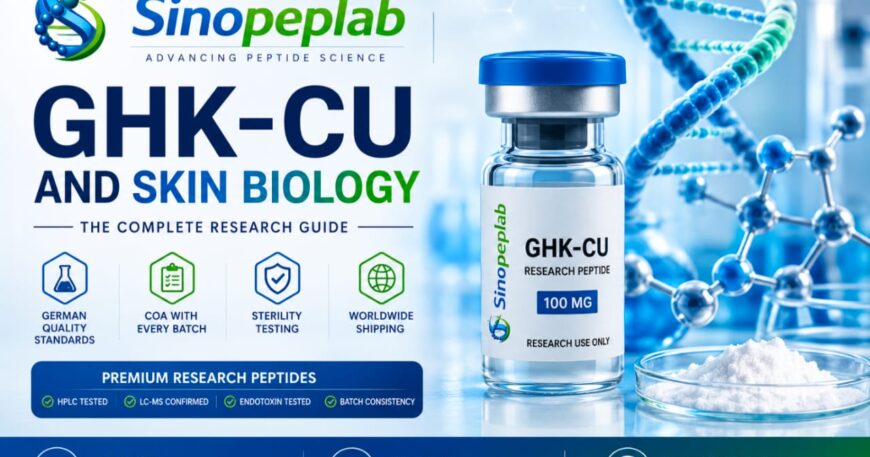
GHK-Cu and Skin Biology : The Complete Research Guide (2026)

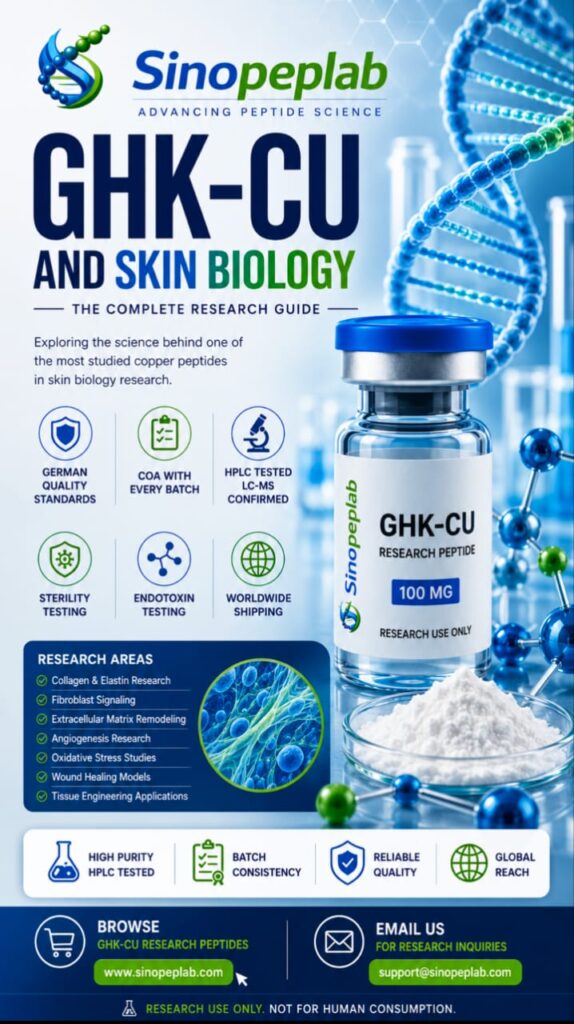
GHK-Cu and Skin Biology: Understanding One of the Most Studied Research Peptides
Skin biology has become one of the fastest-growing areas of peptide research, with scientists investigating how naturally occurring peptides influence cellular communication, tissue remodeling, extracellular matrix organization, and biological signaling. Among the many peptides explored in laboratories worldwide, GHK-Cu (Glycyl-L-Histidyl-L-Lysine Copper Complex) has attracted significant attention because of its broad range of research applications.
Today, research institutions, biotechnology laboratories, cosmetic science researchers, and biohackers continue to investigate how GHK-Cu interacts with biological systems under controlled laboratory conditions. Its role in studies involving skin biology, extracellular matrix proteins, cellular signaling pathways, oxidative stress, and tissue remodeling has made it one of the most referenced research peptides in scientific literature.
At SinoPepLab, we support research professionals by supplying high-purity GHK-Cu research peptides manufactured according to German quality standards. Every research batch undergoes extensive laboratory quality verification, including:
.HPLC Purity Analysis
.LC-MS Identity Confirmation
.Sterility Testing
.Endotoxin Testing
.Batch-to-Batch Consistency Verification
.Certificate of Analysis (COA) with Every Batch
These quality-control procedures help provide researchers with consistent materials suitable for laboratory investigations and analytical studies.
What Is GHK-Cu?
GHK-Cu is a naturally occurring copper-binding tripeptide composed of three amino acids:
.Glycine
.Histidine
.Lysine
When these amino acids bind with a copper (II) ion, they form the GHK-Cu complex, which has been extensively investigated in laboratory research for its biological signaling properties.
Researchers first identified GHK in human plasma several decades ago, where it was observed to naturally occur in small quantities. Since then, numerous laboratory studies have examined how the peptide interacts with cellular environments, particularly those involved in skin biology and extracellular matrix research.
Because copper plays an important role in many biological processes, scientists continue exploring how the GHK-Cu complex influences biochemical pathways relevant to tissue biology, protein regulation, and cellular communication.
It is important to note that GHK-Cu products supplied by SinoPepLab are intended exclusively for laboratory research and analytical purposes. They are not for human use or therapeutic applications.
Why Has GHK-Cu Become So Important in Skin Biology Research?
One reason GHK-Cu receives so much scientific attention is that it is studied across several interconnected research areas rather than a single biological pathway.
Researchers investigate GHK-Cu in studies involving:
.Cellular communication
.Extracellular matrix biology
.Collagen-related protein expression
.Elastin biology
.Oxidative stress mechanisms
.Fibroblast signaling
.Copper-dependent biological pathways
.Tissue remodeling research
.Biomaterial compatibility
.Cosmetic science research
Because these biological systems interact closely, GHK-Cu has become a valuable peptide for multidisciplinary research projects involving biotechnology, peptide chemistry, molecular biology, and cosmetic formulation science.
Mechanisms of Action: How Does GHK-Cu Work?
One of the reasons GHK-Cu (Glycyl-L-Histidyl-L-Lysine Copper Complex) has attracted significant scientific interest is its broad biological activity. Rather than acting through a single pathway, GHK-Cu influences multiple cellular processes that are essential for tissue biology, extracellular matrix regulation, and skin-related laboratory research.
Researchers continue to investigate how this naturally occurring copper peptide regulates gene expression, cellular communication, and protein synthesis in controlled laboratory environments.
1. Gene Expression Modulation
Scientific studies suggest that GHK-Cu is capable of influencing thousands of genes involved in biological repair and tissue maintenance.
Research indicates that GHK-Cu may regulate genes responsible for:
.Collagen production
.Elastin synthesis
.Cellular renewal
.Extracellular matrix remodeling
.Inflammatory signaling
.Antioxidant defense mechanisms
.Fibroblast activity
This broad regulatory capability makes GHK-Cu particularly valuable for laboratories studying complex biological systems rather than isolated cellular pathways.
2. Copper Delivery
Copper is an essential trace element required by numerous enzymes involved in normal cellular function.
GHK acts as a natural transporter that binds copper ions and delivers them where cells may utilize them during biological processes.
Researchers investigate this mechanism because copper-dependent enzymes participate in:
.Connective tissue formation
.Antioxidant protection
.Cellular metabolism
.Protein cross-linking
.Matrix remodeling
This transport function is one reason GHK-Cu continues to be studied extensively within peptide science.
3. Fibroblast Research
Fibroblasts are among the most important cells involved in connective tissue biology.
In laboratory models, GHK-Cu has been widely investigated for its interaction with fibroblast cultures.
Research areas include:
.Cell proliferation
.Cellular signaling
.Extracellular matrix organization
.Protein production
.Laboratory tissue models
Because fibroblasts are responsible for producing structural proteins, GHK-Cu has become an important research molecule in skin biology studies.
4. Collagen and Elastin Research
Collagen provides structural strength while elastin contributes elasticity to connective tissues.
Scientists continue to evaluate whether GHK-Cu influences laboratory markers associated with:
.Collagen Type I
.Collagen Type III
.Elastin production
.Matrix organization
.Structural protein remodeling
These investigations are performed under controlled laboratory conditions to better understand tissue biology.
5. Extracellular Matrix Remodeling
The extracellular matrix (ECM) is the structural network surrounding cells.
Maintaining ECM balance is essential for laboratory investigations involving tissue engineering and regenerative biology.
Researchers study GHK-Cu because it may influence:
.Matrix metalloproteinases (MMPs)
.Tissue inhibitors of metalloproteinases (TIMPs)
.Protein turnover
.Connective tissue organization
Understanding these mechanisms helps scientists investigate how tissues maintain structural integrity over time.
6. Oxidative Stress Research
Oxidative stress is an important area of modern biomedical research.
Numerous laboratory studies investigate whether GHK-Cu supports cellular antioxidant pathways by influencing enzymes involved in protecting cells from oxidative damage.
Research includes evaluation of:
.Reactive oxygen species (ROS)
.Superoxide dismutase activity
.Cellular antioxidant systems
.Oxidative biomarkers
These investigations contribute to broader understanding of cellular aging and biological maintenance.
SinoPepLab’s Commitment to Research Quality
At SinoPepLab, every batch of GHK-Cu Research Peptide is produced according to German quality standards for research materials.
Our quality control program includes:
✔ HPLC Purity Analysis
✔ LC-MS Identity Confirmation
✔ Sterility Testing
✔ Endotoxin Testing
✔ Batch-to-Batch Consistency Verification
✔ Certificate of Analysis (COA) with Every Batch
These quality measures help ensure researchers receive consistent, well-characterized peptide materials suitable for laboratory applications.
Available Research Sizes
.GHK-Cu 50 mg
.GHK-Cu 100 mg
.Bulk research quantities
.Custom manufacturing solutions
Research Use Only. Not for human consumption.
Current Scientific Research on GHK-Cu and Skin Biology
As peptide science continues to advance, GHK-Cu remains one of the most extensively investigated copper peptides in skin biology research. Universities, biotechnology laboratories, cosmetic science researchers, and pharmaceutical organizations continue to study its molecular properties and biological activity in laboratory settings.
Rather than focusing on a single biological function, researchers investigate GHK-Cu across multiple areas of tissue biology, extracellular matrix remodeling, and cellular signaling. This broad scientific interest has resulted in hundreds of peer-reviewed publications exploring its role in skin-related laboratory research.
At SinoPepLab, we support this growing field by supplying high-purity GHK-Cu research peptides manufactured according to German quality standards, with comprehensive analytical testing and documentation for laboratory use.
GHK-Cu and Collagen Research
Collagen is the most abundant structural protein in connective tissues and plays a central role in maintaining the extracellular matrix.
Researchers continue to investigate how GHK-Cu influences laboratory models involving collagen biology, particularly:
.Collagen Type I research
.Collagen Type III research
.Extracellular matrix organization
.Fibroblast communication
.Connective tissue remodeling
Because collagen synthesis is a complex biological process involving numerous signaling pathways, GHK-Cu has become an important peptide for scientists studying the regulation of structural proteins in controlled laboratory environments.
GHK-Cu and Fibroblast Biology
Fibroblasts are specialized cells responsible for producing many of the proteins that form connective tissue.
In laboratory studies, researchers examine how GHK-Cu interacts with fibroblast cultures to better understand:
.Cell signaling
.Cell migration
.Protein synthesis
.Extracellular matrix production
.Tissue organization
Understanding fibroblast biology provides valuable insights into the mechanisms involved in skin maintenance and tissue remodeling.
GHK-Cu and Extracellular Matrix Remodeling
The extracellular matrix (ECM) is a complex network of proteins that provides structural support for tissues.
Scientists investigate GHK-Cu because of its potential influence on the balance between matrix formation and matrix degradation.
Research areas include:
.Matrix metalloproteinases (MMPs)
.Tissue inhibitors of metalloproteinases (TIMPs)
.Connective tissue organization
.Protein turnover
.Matrix homeostasis
These studies help researchers better understand how tissues adapt, remodel, and maintain structural integrity.
GHK-Cu and Angiogenesis Research
Angiogenesis is the biological process through which new blood vessels develop from existing vascular structures.
Researchers investigate angiogenesis because it plays an important role in tissue biology, regenerative science, and laboratory wound models.
Current research explores how GHK-Cu may influence cellular signaling pathways associated with:
.Endothelial cell activity
.Vascular biology
.Tissue remodeling
.Cellular communication
These investigations contribute to a broader understanding of regenerative biology.
GHK-Cu and Oxidative Stress
Oxidative stress occurs when the production of reactive oxygen species exceeds the body’s antioxidant defenses.
Researchers study GHK-Cu in laboratory models to examine its relationship with:
.Cellular antioxidant systems
.Reactive oxygen species (ROS)
.Copper-dependent enzymes
.Oxidative biomarkers
.Cellular stress responses
This research helps scientists explore the complex relationship between oxidative processes and tissue biology.
GHK-Cu in Cosmetic Science Research
Cosmetic science laboratories continue to investigate GHK-Cu because of its role in skin biology research.
Areas of investigation include:
.Biomaterial compatibility
.Cosmetic formulation research
.Peptide delivery systems
.Skin tissue models
.In-vitro skin biology
These studies focus on understanding peptide behavior within laboratory models and supporting the development of future cosmetic technologies.
GHK-Cu in Tissue Engineering Research
Tissue engineering combines biology, biomaterials, and engineering principles to study methods of supporting tissue development.
Researchers investigate GHK-Cu for potential applications in:
.Biomaterial research
.Scaffold development
.Regenerative biology
.Cell culture models
.Tissue engineering systems
Its biological signaling properties make it an important molecule for scientists studying laboratory models of tissue organization.
Why Quality Matters in GHK-Cu Research
Reliable scientific research begins with reliable materials.
Even small variations in peptide purity or manufacturing consistency can affect laboratory experiments, making rigorous quality control essential.
At SinoPepLab, every GHK-Cu batch undergoes:
.HPLC Purity Analysis
.LC-MS Identity Confirmation
.Sterility Testing
.Endotoxin Testing
.Batch-to-Batch Consistency Verification
.Certificate of Analysis (COA) with Every Batch
These quality assurance measures help researchers obtain consistent, well-characterized peptide materials for scientific investigations.
Why Researchers Choose SinoPepLab GHK-Cu
Researchers across Germany, Europe, and worldwide choose SinoPepLab because we emphasize scientific transparency, manufacturing quality, and dependable service.
Our advantages include:
.German quality standards
.High-purity GHK-Cu research peptides
.HPLC-tested products
.LC-MS identity confirmation
.Sterility testing
.Endotoxin testing
.Batch consistency verification
.Certificate of Analysis (COA) with every batch
.Available in 50 mg and 100 mg
. Bulk orders
.Custom peptide manufacturing
.Fast worldwide shipping
.Dedicated customer support
Every SinoPepLab product is manufactured strictly for laboratory research purposes only and is not intended for human consumption, diagnosis, treatment, or prevention of disease.
What Makes a High-Quality GHK-Cu Research Peptide?
Several factors determine the quality of a research peptide. Researchers should evaluate suppliers based on the following criteria:
1. Peptide Purity
Purity refers to the percentage of the desired peptide present in the final product.
Impurities may influence:
.Experimental reproducibility
.Analytical accuracy
.Protein interactions
.Cellular signaling studies
.Laboratory consistency
This is why SinoPepLab performs HPLC Purity Analysis on every production batch.
2. LC-MS Identity Confirmation
While HPLC measures purity, Liquid Chromatography-Mass Spectrometry (LC-MS) confirms the molecular identity of the peptide.
Researchers rely on LC-MS because it helps verify:
.Molecular weight
.Peptide identity
.Manufacturing accuracy
.Product authenticity
Using both HPLC and LC-MS provides a more complete quality assessment than relying on a single analytical technique.
3. Sterility Testing
Research peptides intended for laboratory applications should be manufactured under carefully controlled conditions.
Sterility testing helps verify that manufacturing procedures meet appropriate quality standards and supports the consistency of laboratory materials.
4. Endotoxin Testing
Endotoxins are bacterial components that can interfere with sensitive laboratory experiments.
Testing for endotoxins helps ensure that research materials meet defined quality specifications, particularly for laboratories conducting advanced biological studies.
5. Batch-to-Batch Consistency
Long-term research projects often require multiple peptide batches over months or years.
Consistency between production batches helps reduce experimental variability and supports reproducible scientific investigations.
At SinoPepLab, standardized manufacturing procedures help maintain consistent product quality from batch to batch.
6. Certificate of Analysis (COA)
Every SinoPepLab GHK-Cu batch is accompanied by a Certificate of Analysis (COA).
A COA typically includes:
.Product name
.Batch number
.Purity results
.Analytical methods
.Manufacturing date
.Storage recommendations
This documentation provides researchers with important information before beginning laboratory work.
Why German Quality Standards Matter
Germany has a long-standing reputation for precision manufacturing, scientific innovation, and rigorous quality systems.
By following German quality standards, SinoPepLab emphasizes:
.Controlled manufacturing processes
.Comprehensive analytical testing
.Scientific transparency
.Reliable documentation
.Consistent product quality
These principles help researchers obtain dependable peptide materials for laboratory investigations.
Laboratory Handling Best Practices
Proper laboratory handling helps maintain peptide quality throughout the research process.
Researchers should consider the following practices:
.Use clean, sterile laboratory equipment.
.Minimize repeated exposure to moisture and heat.
.Record lot numbers and batch information.
.Follow validated laboratory protocols.
.Avoid unnecessary handling of lyophilized peptides.
.Store products according to the manufacturer’s recommendations.
These procedures help preserve peptide integrity and support reproducible research.
Storage Recommendations
Correct storage plays an important role in maintaining peptide stability.
Before reconstitution, GHK-Cu should be protected from:
.Direct sunlight
.Excessive heat
.High humidity
.Frequent temperature fluctuations
After reconstitution, researchers should follow validated laboratory storage protocols and minimize repeated freeze-thaw cycles where possible.
Available GHK-Cu Research Products
SinoPepLab currently supplies GHK-Cu in:
.GHK-Cu 50 mg
.GHK-Cu 100 mg
We also offer:
.Bulk research quantities
.Custom peptide manufacturing
.Worldwide shipping
.Dedicated customer support
Whether supplying an academic laboratory or a biotechnology company, our goal is to provide research-grade materials supported by rigorous quality control.
Why Researchers Choose SinoPepLab
SinoPepLab has become a trusted supplier for laboratories seeking premium-quality research peptides.
Researchers choose us because we provide:
.German quality standards
.High-purity research peptides
.HPLC purity analysis
.LC-MS identity confirmation
.Sterility testing
.Endotoxin testing
.Batch-to-batch consistency
.Certificate of Analysis (COA) with every batch
.Bulk orders
.Custom manufacturing
.Fast worldwide shipping
.Responsive technical support
Our commitment is to supply well-characterized research materials that help support reliable and reproducible scientific investigations.
Frequently Asked Questions
1. What is GHK-Cu?
GHK-Cu (Glycyl-L-Histidyl-L-Lysine Copper Complex) is a naturally occurring copper-binding tripeptide that researchers study for its role in cellular signaling, extracellular matrix biology, and skin-related laboratory research.
2. How does GHK-Cu work?
Researchers investigate GHK-Cu because it interacts with biological pathways involved in gene expression, copper transport, extracellular matrix remodeling, fibroblast activity, and antioxidant defense. These mechanisms continue to be explored in laboratory models.
3. Why is GHK-Cu important in skin biology?
Skin biology researchers study GHK-Cu because of its relationship with collagen research, connective tissue organization, extracellular matrix remodeling, and cellular communication.
4. What is the extracellular matrix (ECM)?
The ECM is a network of proteins and molecules that provides structural support for cells. It plays a central role in tissue organization and is an important focus of skin biology research.
5. What are fibroblasts?
Fibroblasts are connective tissue cells responsible for producing structural proteins such as collagen and elastin. They are commonly used in laboratory studies investigating tissue biology.
6. Why is collagen research important?
Collagen is the primary structural protein in connective tissue. Scientists study collagen biology to better understand tissue organization, extracellular matrix maintenance, and regenerative processes.
7. Why is HPLC purity analysis important?
High-Performance Liquid Chromatography (HPLC) helps verify peptide purity, detect impurities, and support batch consistency.
8. Why is LC-MS confirmation necessary?
Liquid Chromatography–Mass Spectrometry (LC-MS) confirms the molecular identity of the peptide, helping ensure researchers receive the correct compound.
9. What is endotoxin testing?
Endotoxin testing evaluates whether bacterial endotoxins are present in a sample, which is important for many laboratory research applications.
10. Why is sterility testing important?
Sterility testing supports manufacturing quality and helps ensure products meet research-grade standards.
11. What is a Certificate of Analysis (COA)?
A COA provides batch-specific information, including purity results, analytical methods, batch identification, and other quality-control data.
12. What sizes does SinoPepLab offer?
SinoPepLab supplies GHK-Cu research peptides in:
.50 mg
.100 mg
Bulk quantities and custom manufacturing are also available.
13. Does SinoPepLab ship internationally?
Yes. We provide secure worldwide shipping for research organizations, biotechnology companies, universities, and laboratories.
14. Who are SinoPepLab products intended for?
Our products are intended for:
.Biotechnology laboratories
.Cosmetic research laboratories
.Universities
.Academic researchers
.Pharmaceutical research organizations
.Qualified research professionals
They are not intended for human consumption or therapeutic use.
15. Why choose SinoPepLab?
Researchers choose SinoPepLab because of our commitment to:
.German quality standards
.High-purity research peptides
.HPLC purity analysis
.LC-MS identity confirmation
.Sterility testing
.Endotoxin testing
.Certificate of Analysis (COA)
.Batch-to-batch consistency
.Worldwide shipping
.Technical customer support
Why Researchers Trust SinoPepLab
Scientific research requires reliable materials, consistent quality, and transparent documentation. SinoPepLab is committed to supporting laboratories worldwide by providing research peptides that meet rigorous manufacturing and quality-control standards.
Our Advantages
✔ German quality standards
✔ HPLC-tested purity
✔ LC-MS identity confirmation
✔ Sterility testing
✔ Endotoxin testing
✔ Certificate of Analysis with every batch
✔ Batch-to-batch consistency
✔ Research-grade manufacturing
✔ 50 mg and 100 mg product sizes
✔ Bulk research orders
✔ Custom peptide manufacturing
✔ Secure worldwide shipping
✔ Dedicated customer support
Our goal is to help researchers conduct reproducible, high-quality scientific investigations.
Explore SinoPepLab’s Research Peptide Portfolio
In addition to GHK-Cu, SinoPepLab supplies a wide range of research peptides, including:
.Semaglutide
.Tesamorelin
.BPC-157
.TB-500
.MOTS-C
.CJC-1295
.Ipamorelin
.Epitalon
Every product is manufactured strictly for laboratory research purposes only and is supported by rigorous quality assurance.
Contact SinoPepLab
Ready to support your next research project?
Browse GHK-Cu Research Peptides
Explore our catalog of high-purity research peptides designed for biotechnology, cosmetic science, and academic research.
We offer bulk quantities and custom manufacturing solutions tailored to research institutions and biotechnology companies.
sinop